
Van Speed Restrictions
What Every Driver Needs to Know
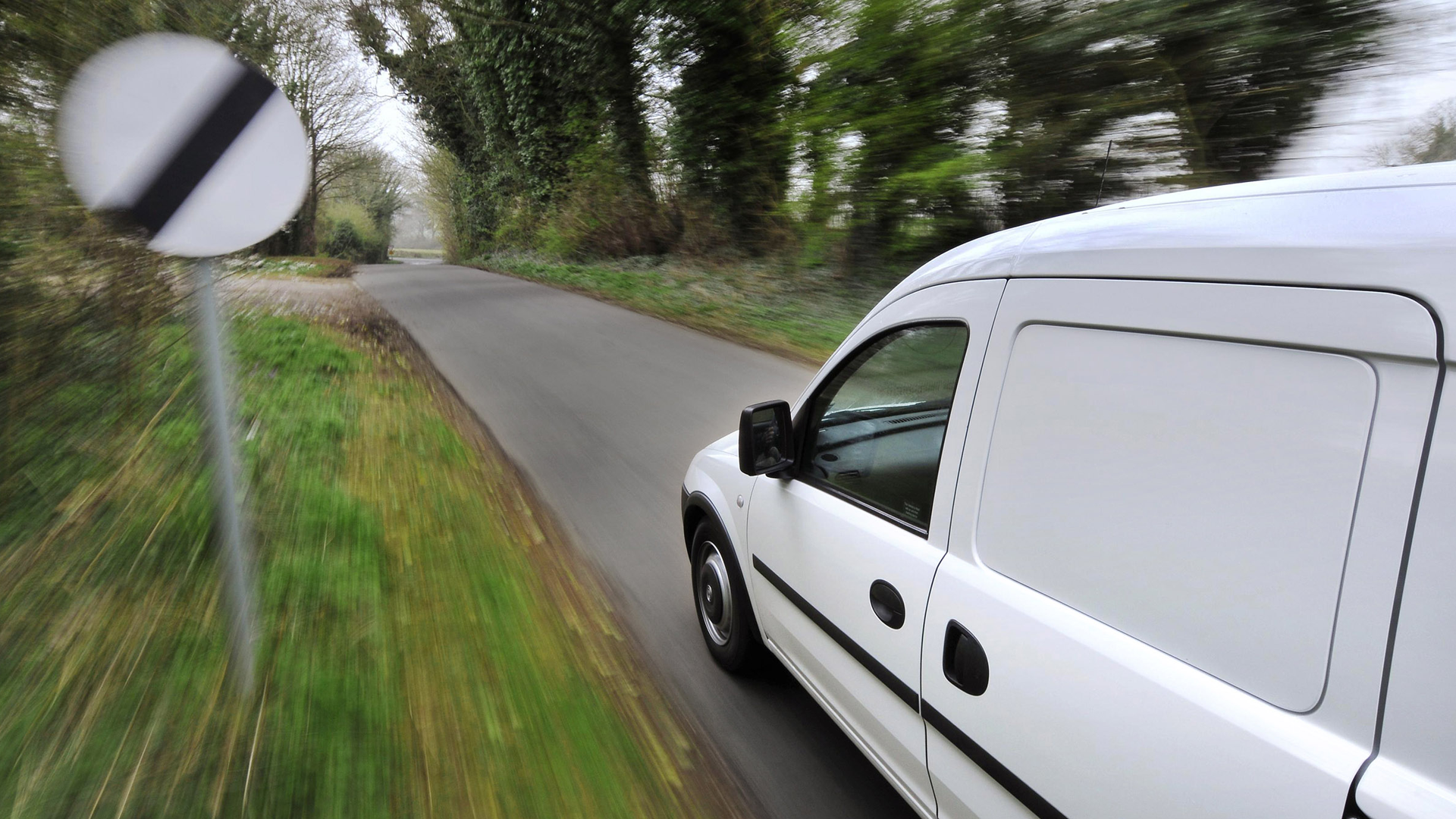
If you’re hiring or driving a van for work, understanding UK van speed restrictions is essential. Many drivers assume vans follow the same speed limits as cars, but that’s not always the case. At Easihire Preston, we regularly speak to customers who are surprised to learn that certain vans have lower national speed limits than standard passenger vehicles.
Knowing the rules can help you avoid fines, penalty points, and unnecessary risks while keeping yourself and other road users safe.
Are Van Speed Limits Different From Cars?
In most cases, yes. Vans under 3.5 tonnes maximum laden weight are often subject to lower speed limits than cars when travelling on single and dual carriageways.
The confusion usually comes from the fact that many modern vans drive similarly to cars, especially smaller models such as Ford Transits, Volkswagen Transporters, and Vauxhall Vivaros. However, the law classifies many of these vehicles differently.
Standard UK Van Speed Limits
For vans under 3.5 tonnes, the national speed limits are generally:
- 30 mph in built-up areas
- 50 mph on single carriageways
- 60 mph on dual carriageways
- 70 mph on motorways
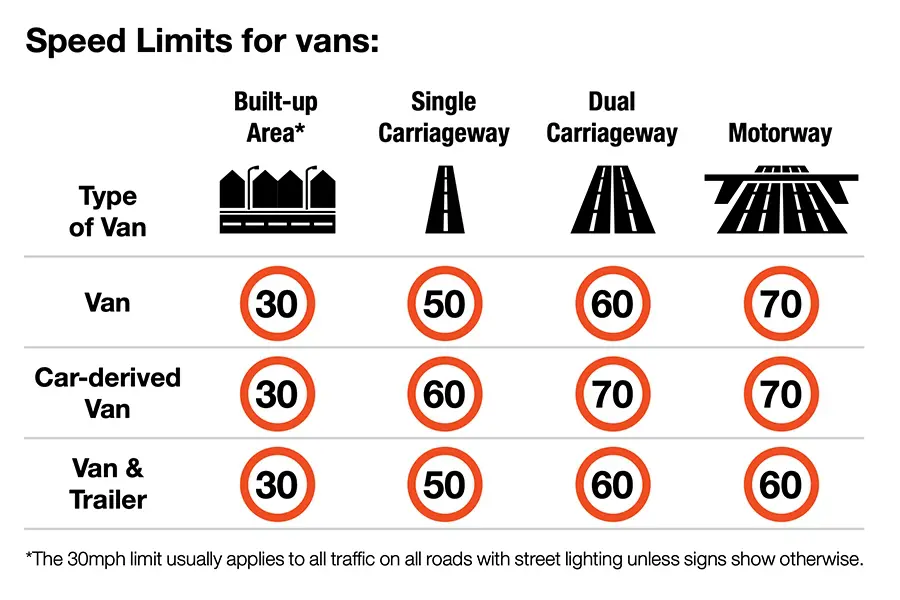
By comparison, cars are allowed:
- 60 mph on single carriageways
- 70 mph on dual carriageways
This means van drivers must often travel 10 mph slower than cars on certain roads.
What Counts as a Van?
The rules apply to most light commercial vehicles designed primarily for carrying goods rather than passengers. This includes:
- Panel vans
- Luton vans
- Pick-up trucks above certain weight classifications
- Some crew vans
However, there are exceptions. Car-derived vans — small vans based on passenger car platforms and weighing no more than 2 tonnes when fully loaded — can usually follow standard car speed limits.
Examples may include:
- VW Caddy Van
- Vauxhall Combo Van
- Ford Fiesta Van
Always check the vehicle classification before driving.
Why Do Vans Have Lower Speed Limits?
Van speed restrictions exist because commercial vehicles behave differently on the road. Vans are typically:
- Heavier than cars
- Carrying loads or equipment
- Less stable during sudden manoeuvres
- Slower to brake when fully loaded
Higher centres of gravity and shifting cargo can also increase stopping distances and rollover risks, especially on rural roads and roundabouts.
The reduced speed limits are designed to improve safety for both drivers and other road users.
What About Motorways?
Most vans under 3.5 tonnes can travel at 70 mph on motorways, the same as cars.
However, drivers should still take extra care in windy conditions or when carrying heavy loads. Even legally travelling at motorway speeds, a fully loaded van may require much greater stopping distances.
If your vehicle exceeds 3.5 tonnes, different goods vehicle speed restrictions apply.
Smart Motorways and Average Speed Cameras
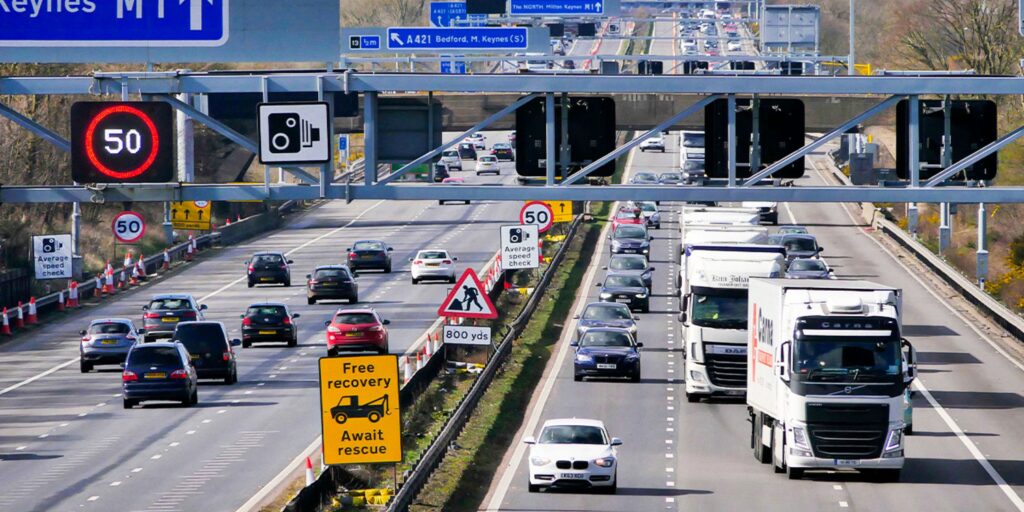
Van drivers should pay particular attention to average speed camera zones. Many enforcement systems automatically identify vehicle types using DVLA records.
A common mistake occurs when van drivers follow the flow of surrounding cars on dual carriageways, unintentionally exceeding the legal van limit.
Unfortunately, “keeping up with traffic” is not accepted as a defence if you receive a speeding notice.
Tips for Staying Safe and Legal
When hiring or driving a van, follow these simple tips:
- Check the vehicle classification before your journey
- Plan extra travel time for slower road limits
- Leave larger stopping distances
- Secure loads properly
- Use cruise control where appropriate
- Watch for changing speed signs and temporary restrictions
At Easihire Preston, we always recommend familiarising yourself with the vehicle before setting off, especially if you do not drive vans regularly.
Final Thoughts
Van speed restrictions can catch out even experienced drivers, particularly those moving from cars into commercial vehicles. Understanding the differences is essential for staying safe, protecting your licence, and avoiding costly penalties.
Whether you’re hiring a van for moving house, business deliveries, or transport work, knowing the correct speed limits helps ensure a smoother and safer journey from start to finish.